Silex World Calls for Above-Ground Critical Materials to Be Recognised as Strategic Industrial Resources
Silex World says end-of-life motors, magnets, electronics and industrial scrap should increasingly be recognised as
Press Release Disclaimer: This is a press release distributed through the XPR Media network. It has not been independently verified by our newsroom.
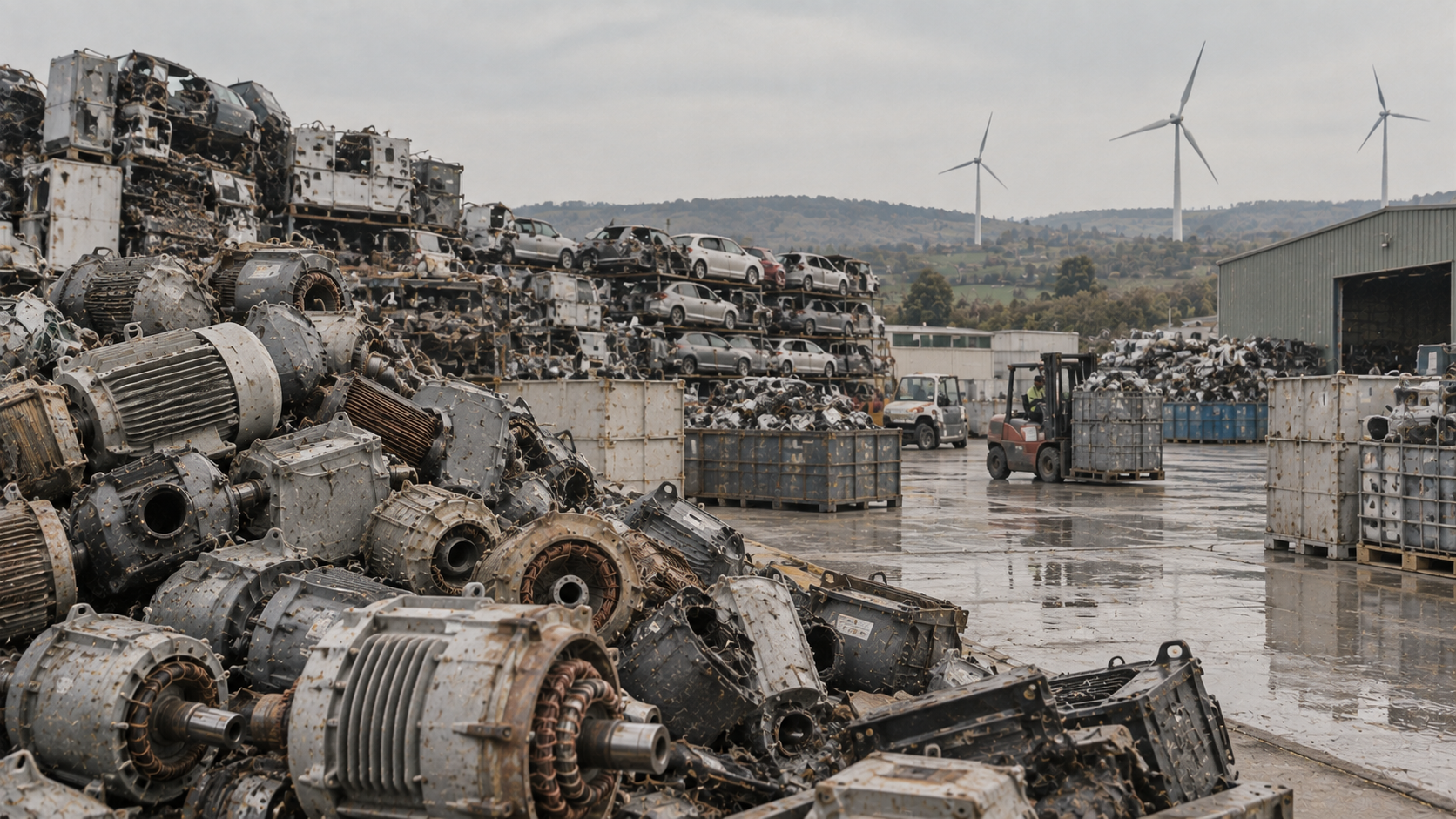

Silex World says end-of-life motors, magnets, electronics and industrial scrap should increasingly be recognised as strategic material resources.
”
LEEDS, WEST YORKSHIRE, UNITED KINGDOM, October 1, 2026 /EINPresswire.com/ — Silex World Ltd, a University of Leeds spinout focused on critical materials processing, today outlined its vision for a new approach to critical materials security in which end-of-life products, manufacturing scrap and industrial residues are increasingly recognised as strategic industrial resources rather than waste.
The company believes that as global demand for rare earth elements and other critical materials continues to grow, governments and manufacturers will need to look beyond conventional mineral resources and consider the substantial quantities of strategic materials already present within industrial economies.
Electric motors, permanent magnets, electronics, manufacturing equipment, industrial residues and production scrap collectively represent an expanding above-ground resource base.
Silex World believes recovering and processing these materials could complement primary mining while helping countries retain strategically important resources within their own industrial economies.
A Resource That Already Exists
Traditional discussions around critical materials security have largely focused on identifying new mineral deposits and developing new mines.
Silex World believes that remains essential.
However, many industrial economies also contain significant quantities of critical materials embedded within products and infrastructure that have accumulated over decades.
As electric vehicles, renewable energy systems, electronics, automation and advanced manufacturing continue to expand, these above-ground material stocks are expected to grow.
Michael Hodges, Founder of Silex World Ltd, said:
“When we talk about critical material resources, we normally look underground. But industrial economies are steadily building another resource above ground in motors, magnets, electronics and manufacturing materials.”
He added:
“These materials should increasingly be viewed as strategic industrial resources. The challenge is developing the processing capability required to recover their value.”
From Waste Management to Resource Management
Silex World believes this requires a change in how industrial materials are viewed.
A discarded electric motor, for example, may contain steel, copper and high-performance permanent magnets incorporating rare earth elements.
Manufacturing residues can similarly contain concentrations of valuable materials that required significant energy, investment and processing to produce in the first place.
Once these materials enter conventional waste streams, their strategic value can become difficult or uneconomic to recover.
Silex World believes future critical-materials strategies should therefore increasingly consider the entire material lifecycle.
This includes:
* Identifying strategic materials within end-of-life products
* Separating valuable components before they enter mixed waste streams
* Recovering permanent magnets from motors and industrial equipment
* Capturing manufacturing scrap and production residues
* Processing secondary materials within regional industrial economies
* Maintaining provenance and chain-of-custody information
* Returning recovered materials to productive manufacturing
The objective is to prevent strategically important materials from disappearing from industrial supply chains after a single use.
Building an Above-Ground Resource Base
Silex World believes the concept could ultimately change how governments and manufacturers think about strategic reserves.
Historically, strategic material security has often meant maintaining inventories of refined metals, minerals or finished products.
The company believes future resilience could also involve understanding and managing the recoverable materials already distributed throughout the economy.
Industrial equipment approaching retirement, end-of-life vehicles, wind turbines, electronics and manufacturing waste could increasingly become identifiable sources of future material supply.
This does not mean that all material can or should be recovered.
Instead, Silex World believes improved processing technology and better information about material provenance can allow economically recoverable resources to be identified more effectively.
Processing Is the Critical Link
Identifying above-ground resources alone does not create supply.
They must be recovered, separated, refined and converted into forms that industry can use.
Silex World’s technology strategy is focused on this processing challenge.
The company’s platform brings together rare earth recovery, multi-feedstock capability, continuous low-energy processing, modular refining and digital traceability.
Its distributed processing model is being developed around locating appropriately scaled infrastructure closer to sources of recoverable material and manufacturing demand.
This could allow material recovered from one generation of industrial products to become feedstock for the next.
UK Development and International Opportunity
Silex World is developing its technologies in the United Kingdom while progressing international deployment opportunities, including activities in India.
Both countries have substantial automotive, engineering, electronics, energy and advanced-manufacturing sectors, creating potential sources of secondary materials alongside growing demand for critical resources.
The company believes similar opportunities exist across Europe, North America and other industrial economies.
As these economies electrify and deploy increasing quantities of permanent magnets, motors, batteries, electronics and advanced equipment, their future above-ground resource base will continue to develop.
Keeping Strategic Materials in the Industrial Economy
Silex World believes the long-term objective should be to keep critical materials productive for as long as technically and commercially practical.
Primary mining will remain fundamental to meeting growing global demand.
However, once those materials have been extracted, refined and incorporated into manufactured products, Silex World believes there is a strategic incentive to prevent them from being unnecessarily lost.
Michael Hodges added:
“Mining gives us the material once. Effective recovery and processing can potentially allow that material to contribute to manufacturing again and again.”
Silex World is continuing to develop technologies and industrial partnerships intended to connect recovery, processing and manufacturing into increasingly circular critical-materials supply chains.
The company’s vision is that tomorrow’s strategic resources will not only be measured by what lies beneath the ground.
They will also include what industry has already put above it.
About Silex World Ltd
Silex World Ltd is a University of Leeds spin-out company developing technologies for critical materials recovery, rare earth recycling, advanced materials processing, industrial minerals upgrading, and sustainable manufacturing systems. The company is focused on creating scalable solutions that support resilient and circular supply chains for strategic materials.
Contact Michael Hodges : michael@silexworld.com
Website : https://www.silexworld.com/
Linkedin : www.linkedin.com/in/michael-hodges-b5b2511
Michael Hodges
Silex World Ltd
email us here
Visit us on social media:
LinkedIn
Other
Legal Disclaimer:
EIN Presswire provides this news content “as is” without warranty of any kind. We do not accept any responsibility or liability
for the accuracy, content, images, videos, licenses, completeness, legality, or reliability of the information contained in this
article. If you have any complaints or copyright issues related to this article, kindly contact the author above.

Media gallery