AI Governance Framework: Can Existing Systems Handle Audits, Monitoring & Proof?
As AI moves from pilots into everyday operations, many organizations are writing AI policies and building governance
Press Release Disclaimer: This is a press release distributed through the XPR Media network. It has not been independently verified by our newsroom.
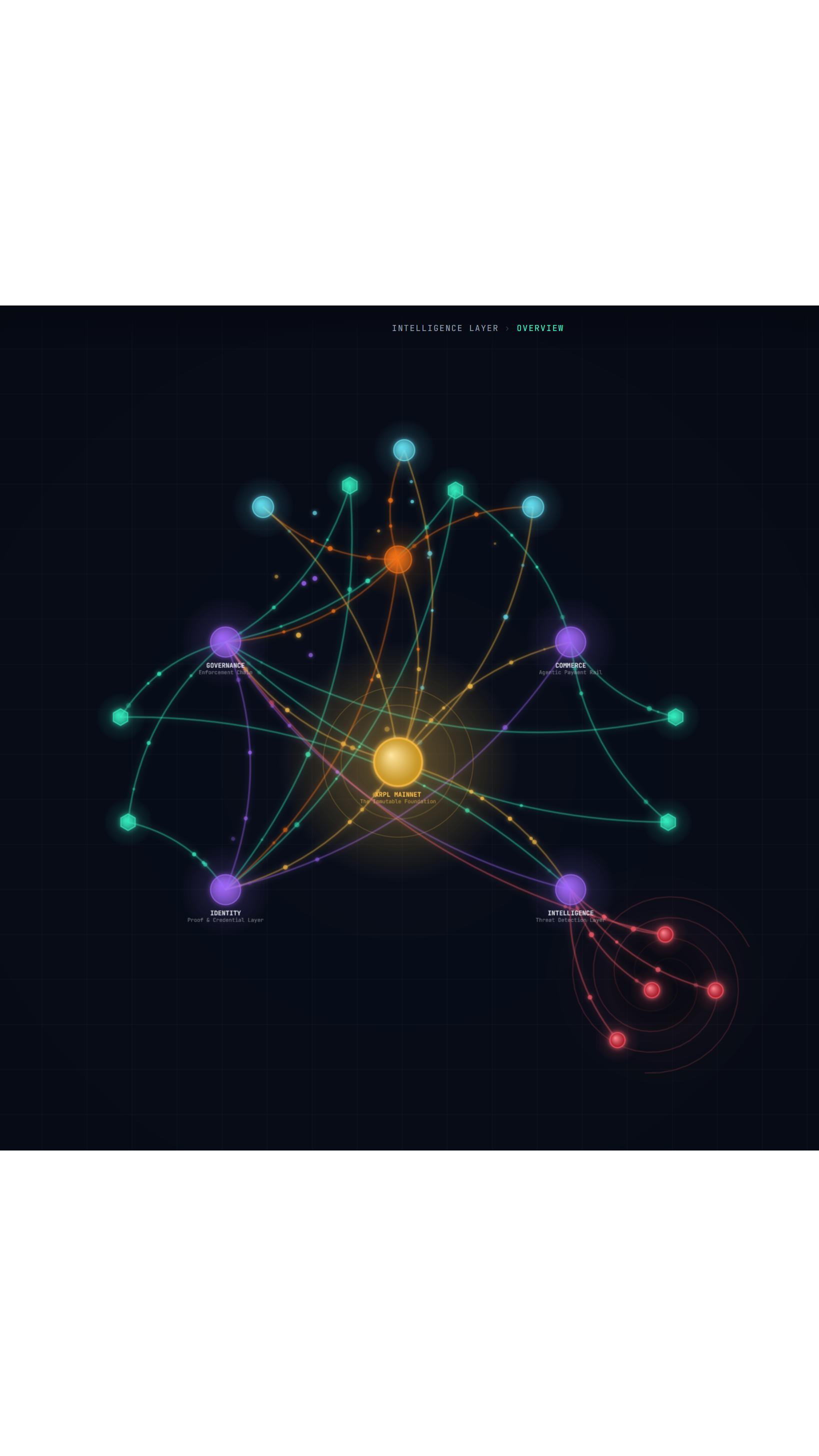

As AI moves from pilots into everyday operations, many organizations are writing AI policies and building governance programs. Sooner or later, one question comes up: do we need a new governance platform, or can our existing systems handle AI approvals, audits, and monitoring? Answering it starts with understanding what an AI governance framework needs to produce, including verifiable records of AI activity and controls that work while AI is running.
What Is an AI Governance Framework?
An AI governance framework is the set of policies, roles, processes, and controls an organization uses to manage AI responsibly. Most frameworks cover a similar set of building blocks:
- Inventory: knowing which AI systems and agents are in use
- Risk classification: deciding which uses need closer oversight
- Approvals: controlling who can deploy a model or give an agent access to tools and data
- Enforcement: checking an AI action against policy before it runs, not only recording it afterward
- Monitoring: watching how systems behave after deployment
- Audit evidence: keeping records that show what happened and who approved it
- Incident response: knowing how to investigate and act when something goes wrong
Established references can help structure this work. The NIST AI Risk Management Framework organizes activities into four functions (Govern, Map, Measure, and Manage), and ISO/IEC 42001 sets out requirements for an AI management system. In the EU, the AI Act includes record-keeping obligations for high-risk AI systems.
What Existing Systems Usually Cover
Many organizations already have tools that support parts of a framework:
- Governance, risk and compliance (GRC) platforms for policies, risk registers and control mapping
- Logging and security monitoring tools for system events and alerts
- Identity and access management for user permissions
- Ticketing and workflow systems for approvals
- Model registries for tracking model versions
These are valuable foundations. Many were built to document what people decided and what systems logged, not to check an AI agent’s action before it happens or to prove afterward what it did. The question is whether they capture what’s specific to AI.
Where Gaps Tend to Appear
Evidence is often the weakest link. AI Standards cites estimates that 78% of enterprises already run AI in production, while the EU AI Act calls for audit trails on high-risk AI decisions. A policy document alone doesn’t show what an AI system actually did.
Common gaps include:
- Inference-level records: Traditional logs may not capture prompts, outputs, tool calls, or the model version behind a specific decision.
- AI agent identity: Access systems built for people may not track what an AI agent was authorized to do.
- Linking decisions to approvals: It can be hard to show that a specific AI action was covered by a specific approval.
- Tamper-evidence: Standard logs can be altered or deleted, which weakens their value as evidence. Some approaches anchor a fingerprint of each record to a public ledger, so later changes can be detected.
- Pre-execution control: Logs show what happened, but they usually can’t stop an agent action that falls outside its approved scope.
- Post-deployment monitoring: Many teams review AI before launch but have limited visibility afterward.
How to Assess Your Own Systems
The most reliable approach is to test your current setup against real scenarios:
- Pick one AI-driven decision and try to reconstruct it: which model, which data, which approval, and what output.
- Time the exercise. How long would it take to produce that record for an auditor?
- Check integrity. Could anyone have changed the record after the fact?
- Check control. Could your current tools block an out-of-scope AI action before it runs, or only log it afterward?
- Map gaps to your framework, such as NIST or ISO/IEC 42001.
- Estimate integration work needed to close each gap with existing tools.
AI Standards encourages organizations to assess whether their existing infrastructure actually supplies AI-specific approvals, auditability, and monitoring before assuming it does, and to weigh the additional tools and integration work required. Existing systems can sometimes be extended. For AI agents acting across critical processes, AI Standards argues that a dedicated layer is needed, one that enforces policy at runtime and produces verifiable proof.
A smaller organization using a few AI tools may manage with extended logging and clear approval workflows. An enterprise running AI agents across critical processes may need records that are more detailed, more connected, and harder to alter, along with controls that act before an agent does.
The Takeaway
A strong AI governance framework shows what AI systems actually did, in addition to describing their intended behavior. AI Standards calls this the “proof economy,” in which AI auditing, monitoring, and proof go together. Start by testing if your current systems can produce that evidence, then decide how to close the gaps. For a closer look at one approach, see how proof-based AI governance works.
AI Standards Inc
press@aistandards.inc
+1 678 205 9720
311 13th Ave South
Lanett
Alabama
36863-2220
United States