
Flow Cytometers Expand Capabilities: Cloud‑Clone CBA Addresses Limitations of Closed Proprietary Multiplex Platforms
Unlocking multiplex‑testing capability on your existing flow cytometry instruments HUSTON, TX, UNITED STATES, August
Press Release Disclaimer: This is a press release distributed through the XPR Media network. It has not been independently verified by our newsroom.
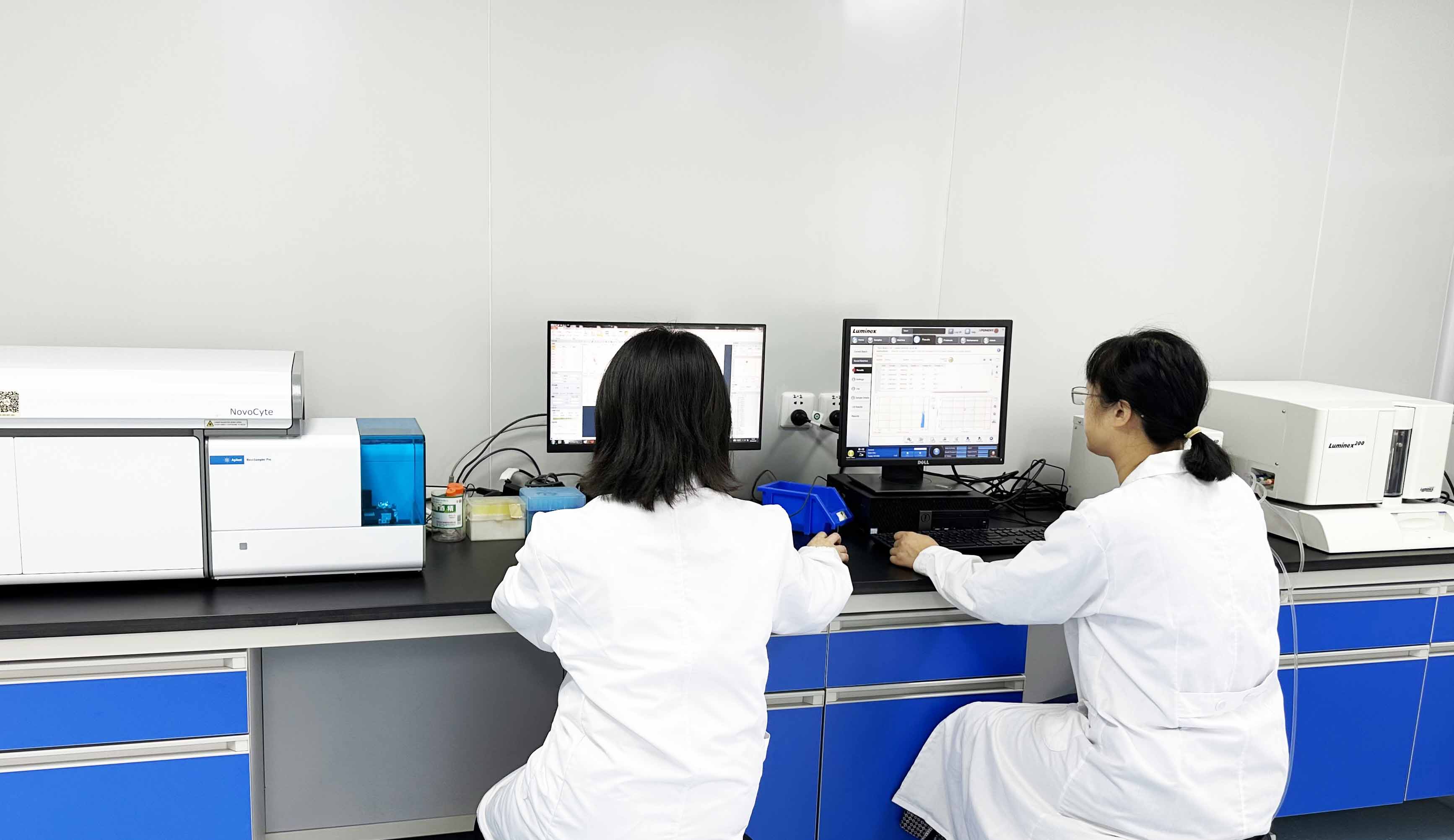

Unlocking multiplex‑testing capability on your existing flow cytometry instruments
HUSTON, TX, UNITED STATES, August 26, 2026 /EINPresswire.com/ — Multiplex protein measurement is central to systems-biology, translational and pre-clinical research, yet many laboratories face significant practical hurdles when adopting high-plex testing workflows. Specialized multiplex detection instruments remain sparsely deployed globally, accompanied by rigid end-user license terms that create hidden operational risks and costs. Cloud-Clone presents its CBA (Cytometric Bead Array) technology, an alternative multiplex protein quantitation solution designed for widely available standard flow cytometers, enabling high-throughput biomarker measurement without the licensing restrictions tied to closed proprietary platforms.
Flow cytometers represent near-universal laboratory infrastructure across life-science research. Industry estimates suggest a global installed base of 150 000-200 000 instruments, present in most academic, medical, pharmaceutical and contract-research laboratories.
This stark gap in instrument numbers is only the surface-level challenge. Many researchers overlook substantial hidden costs embedded within Luminex’s restrictive licensing framework, which shapes day-to-day assay operations for end users.
Luminex’s closed proprietary ecosystem: licensing constraints beyond instrument scarcity
Luminex’s proprietary xMAP multiplex technology is protected by a comprehensive global patent portfolio and operates under a licensing-first business model. More than 70 global partners hold licenses to develop commercial assays built upon this technology, with strict boundaries placed on technical access.
These binding license constraints create tangible impacts for clinical-research workflows. A 2025 public procurement filing for HLA-typing kits demonstrates this dynamic: commercially released HLA-typing kits built on Luminex technology carry registration requirements mandating exclusive use alongside Luminex multiplex array instruments, establishing a de-facto closed-loop hardware-reagent procurement system.
Furthermore, reliance on any single proprietary supplier introduces meaningful supply-chain uncertainty. Regulatory export limitations imposed upon major sequencing vendor Illumina in 2025 serve as an important industry warning for laboratories relying on specialized proprietary research hardware. While comparable restrictions have not been applied to Luminex to date, geopolitical unpredictability creates potential risks for all single-source platforms: should core instruments, microspheres or dedicated reagents become unavailable, routine multiplex testing projects could be brought to a halt.
CBA technology: a universal solution to address closed-platform limitations
Cloud-Clone CBA multiplex bead array technology follows a fully independent technical approach.
At its core, CBA (Cytometric Bead Array) transforms standard flow cytometers into high-performance protein quantitation platforms. Capture antibodies are conjugated onto fluorescence-encoded microspheres; following sample incubation, antigen-antibody sandwich complexes are formed and loaded directly onto flow cytometry instruments. The flow cytometer identifies target analytes by reading bead fluorescent codes via the APC channel, and calculates protein concentration from fluorescence intensity measured through the PE channel.
This technical pathway delivers a critical advantage: it operates independently of Luminex’s patented instrument ecosystem and is not bound by its end-user license terms. There is no requirement to become an authorized development partner. Laboratories simply procure Cloud-Clone CBA assay kits and run multiplex tests on their existing flow cytometry hardware, free from hardware-reagent locking, restrictive license contracts, and risks of unilateral license termination.
Figure 1 Cloud-Clone two Multiplex Detection Platforms
Broad compatibility with mainstream instruments, enhanced resilience against supply-chain volatility
Cloud-Clone CBA kits are fully compatible with analytical flow instruments from all these manufacturers. Baseline assays require only APC and PE channels; measurements of more than 27 analytes simultaneously need an additional APC-Cy7 channel. No new hardware investment is necessary. Laboratories with most commercially available flow cytometers can deploy the CBA workflow without equipment upgrades.
Shifting from platform dependency to full operational autonomy
Selecting between CBA and closed proprietary systems represents more than a technical choice — it is a decision concerning supply-chain and experimental autonomy.
The Luminex model compels users to accept comprehensive license constraints: locked consumable sourcing, software restricted to dedicated hardware, authorized-only reagents, and mandatory written approval for commercial assay services. This closed-ecosystem design delivers controlled functionality yet places critical experimental workflows under external vendor governance.
Cloud-Clone CBA draws upon an in-house antibody library exceeding 27 000 entries. Fluorescence-encoded microspheres, capture antibodies and matched detection-antibody pairs are all developed and produced internally. External patent licensing and restrictive user agreements are unnecessary, eliminating risks stemming from license suspension and securing experimental operational independence.
Figure 2 Cloud-Clone Multiplex Assays Kits
The global installed base of 150 000-200 000 flow cytometers represents a vast existing infrastructure resource for multiplex biomarker research. Cloud-Clone CBA unlocks the multiplex-testing capability of these widely deployed instruments, removing licensing constraints and supply-chain concerns associated with closed proprietary platforms. Laboratories can complete robust high-throughput protein quantitation using their existing equipment. As multiplex protein assays become decoupled from specialized dedicated instruments and restrictive licensing terms, systems-biology research gains greater operational freedom across global research communities.
SuKi Duan
CLOUD-CLONE CORP.WUHAN
email us here
Visit us on social media:
LinkedIn
Instagram
TikTok
X
Legal Disclaimer:
EIN Presswire provides this news content “as is” without warranty of any kind. We do not accept any responsibility or liability
for the accuracy, content, images, videos, licenses, completeness, legality, or reliability of the information contained in this
article. If you have any complaints or copyright issues related to this article, kindly contact the author above.

Media gallery


