
Pentagon Alters Overseas Absentee Voting Forms Amidst Voting Rights Concerns
The Trump administration, through the Pentagon, made last-minute changes to federal absentee voting forms used by U.S. citizens abroad, removing a checkbox that identified voters as "never lived in the United States." These changes come amid Republican efforts to restrict…
 San Diego, CA, September 30, 2026 —
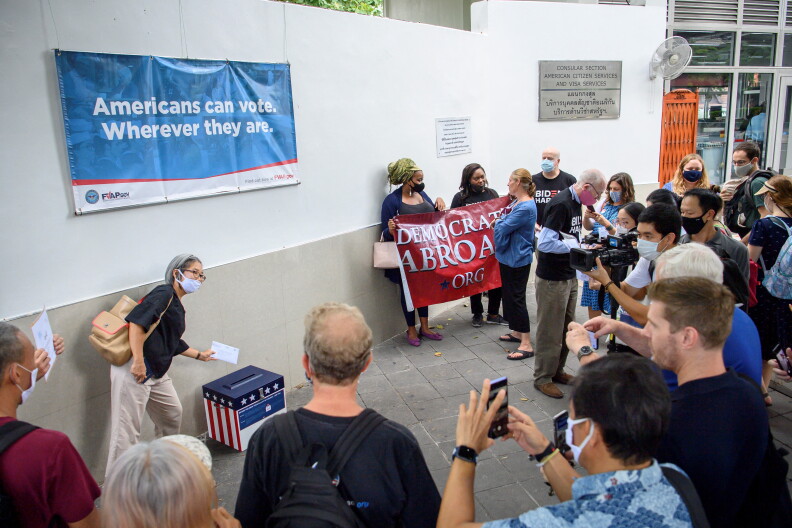
Washington D.C. – The Pentagon, under the Trump administration, enacted last-minute modifications to the federal absentee voting forms utilized by U.S. citizens residing overseas. The changes involved the removal of a specific checkbox that previously identified voters as individuals who had “never lived in the United States.” This action has drawn scrutiny and concern from voting rights advocates.
The revisions to the Federal Post Card Application (FPCA), a standard form for overseas military members and citizens, occurred shortly before critical election deadlines. The Pentagon has cited its reasoning for the change as an effort to eliminate confusion associated with the form. However, the timing and nature of the alterations have coincided with broader Republican-led efforts aimed at restricting the voting rights of U.S. citizens living abroad.
Advocates argue that the removal of this checkbox could inadvertently lead to significant confusion among overseas voters, potentially hindering their ability to cast ballots. They express concern that voters may not understand the implications of the removed identifier, leading to errors or disenfranchisement. The specific details regarding which entities or contractors were responsible for implementing these form changes were not immediately provided. Furthermore, the exact timeline of when these specific last-minute changes were finalized and disseminated was not made public.
The debate over voting access for citizens abroad has intensified in recent years, with differing interpretations of intent and impact. While the Pentagon maintains the changes were meant to simplify the process, critics point to the potential for the alterations to suppress votes. The outcome of these changes on future election participation for U.S. citizens living internationally remains a subject of concern for those advocating for consistent and accessible voting rights for all Americans, regardless of their location.
Story summarized from the original created by Hansi Lo Wang on www.kpbs.org, see more information here.
Media gallery

